The Physics of Fire: Why Moissanite Outshines Diamond

Why Moissanite Outshines Diamond​

                                      The Myth vs. Reality

The Physics of Fire: Why Moissanite Outshines Diamond
The Myth vs. Reality

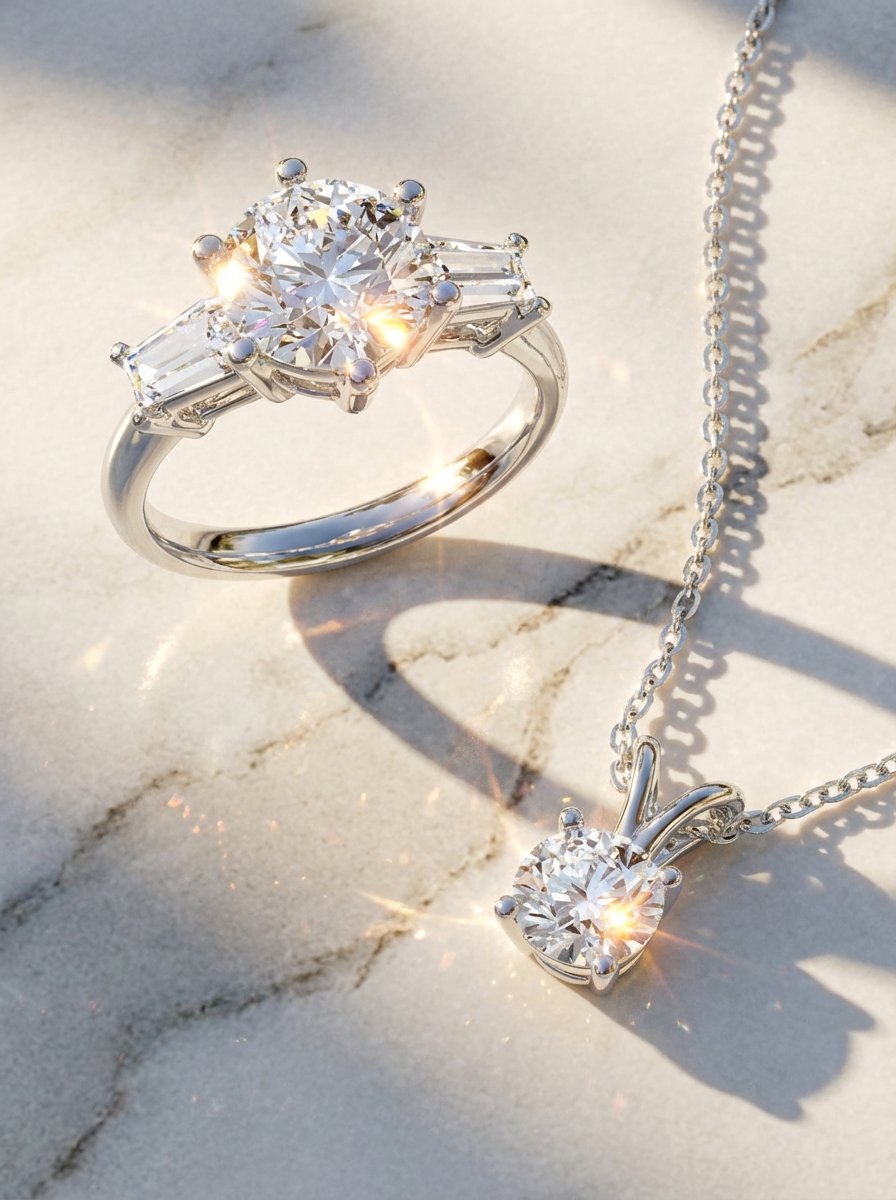
Many describe the brilliance of moissanite as a “disco ball effect,” a term often misunderstood. To a gemologist, this is not magic—it is physics. Specifically, it comes down to Refractive Index (RI) and Dispersion. At TIMELESSTROVE, we believe true luxury lies in understanding what you wear. You are not wearing a diamond imitation; you are wearing superior optical engineering born from the stars.

The Brilliance Engine: Refractive Index

Brilliance is the “white light” reflected back to your eye. The higher the Refractive Index (RI), the more light the gemstone captures and returns.

  • Diamond RI: 2.42
  • Moissanite RI: 2.65 – 2.69

Scientifically, moissanite is the world’s most brilliant gemstone. It slows down and bends light more effectively than a diamond, creating an intense, unbroken return of light that is technically superior.

The Art of Rainbows: Dispersion

This is the source of the “Fire.” Dispersion measures how a gemstone breaks white light into spectral colors. Moissanite boasts a dispersion score of 0.104, which is 2.4 times higher than a diamond (0.044). While diamonds offer a restrained sparkle, moissanite provides a pyrotechnic display. This is not a flaw; it is a physical property that maximizes light performance.


At a Glance: Moissanite vs. Diamond Optical Specs

Expert Tip: Tables are favored by search engines for quick comparisons.

FeatureDiamondMoissaniteThe TIMELESSTROVE Advantage
Refractive Index2.422.65 – 2.69Superior white light return
Dispersion (Fire)0.0440.1042.4x more rainbow flashes
Refraction StyleSingleDoubleGreater depth and sparkle
Hardness (Mohs)109.25Heirloom durability
 
 The Depth of Light: Birefringence

Unlike diamonds, which are singly refractive, moissanite is doubly refractive. Every beam of light entering the stone is split in two, doubling the facet reflection.

At TIMELESSTROVE, our cutters align the optical axis perfectly through the table to prevent any blurriness. This precision cut ensures you get maximum fire with absolute crispness, solving the common “hazy” look found in lower-quality stones.

The Verdict: Optimizing for Beauty

When you choose moissanite, you are not compromising on beauty; you are optimizing for physics. You are selecting a stone that works harder to catch the light. It is the smart, scientific choice for the modern connoisseur.

Frequently Asked Questions

Does moissanite get cloudy over time?
Yes, absolutely. Unlike Cubic Zirconia which degrades, Moissanite is made of Silicon Carbide, a stable material that retains its clarity forever.

*Expert Tip: If it looks hazy, it’s likely just surface oil. A quick wipe with a cloth restores it instantly.
This is called “Fire”. Moissanite has a dispersion rating of 0.104 (2.4x higher than diamond), which breaks light into spectral colors.

At TIMELESSTROVE, we use precision cutting to control this fire, ensuring it looks elegant and crisp, not blurry.

Absolutely. Moissanite scores 9.25 on the Mohs Hardness Scale, making it the second-hardest gemstone used in jewelry—significantly harder than Sapphires (9) and Rubies (9).

Its superior structural integrity makes it extremely resistant to scratching, chipping, and breaking. This durability makes it an ideal choice for engagement rings intended for everyday wear.

Unlike softer stones, you can wear it confidently while showering, sleeping, or at the gym without worrying about it losing its sparkle or getting damaged over time.

Timeless Trove Collection

Shop The Science of Shine

Discover the fire and brilliance of our hand-selected Moissanite gemstones.
Ethically sourced. Scientifically superior.

Shopping Cart
What Our Clients Say
0 reviews